Cutana
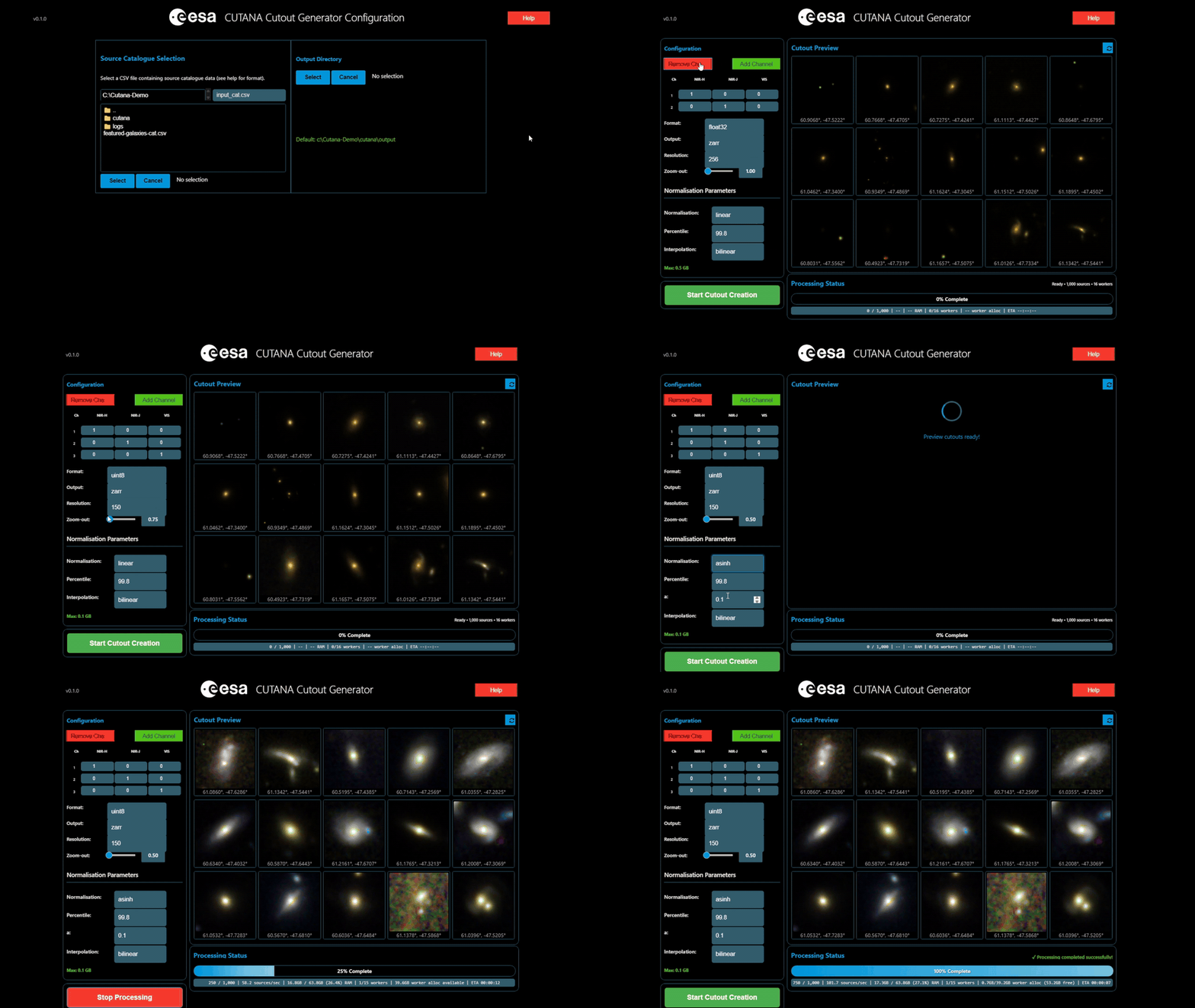
Cutana is a high-performance Python pipeline for creating astronomical image cutouts from large FITS datasets. It provides both an interactive Jupyter-based UI and a programmatic API for processing survey data such as ESA Euclid observations.
Optimised for Euclid
Cutana is currently optimised for Euclid Q1/IDR1 data. Some defaults and assumptions are Euclid-specific:
- Flux conversion expects the
MAGZEROheader keyword (configurable viaconfig.flux_conversion_keywords.AB_zeropoint) to convert to Jy - Filter detection patterns are tuned for Euclid bands (VIS, NIR-Y, NIR-H, NIR-J)
- FITS structure assumes one file per channel/filter
For other surveys, you may need to adjust these settings or disable flux conversion (config.apply_flux_conversion = False).
Where to start
| If you want to | Read |
|---|---|
| Install Cutana and make your first cutouts | Getting started |
| Do a specific task, such as streaming cutouts into a model or mixing bands into RGB | How-to guides |
| Look up a catalogue column, config parameter or output format | Reference |
| Understand band matching, WCS handling or performance behaviour | Explanation |
| Look up a function or class | API reference |
Support
- Source code and issues: ESA/Cutana on GitHub
- ESA Datalabs users: open a service desk ticket
- Citation: arXiv:2511.04429