AnomalyMatch
Semi-supervised anomaly detection for astronomical images.
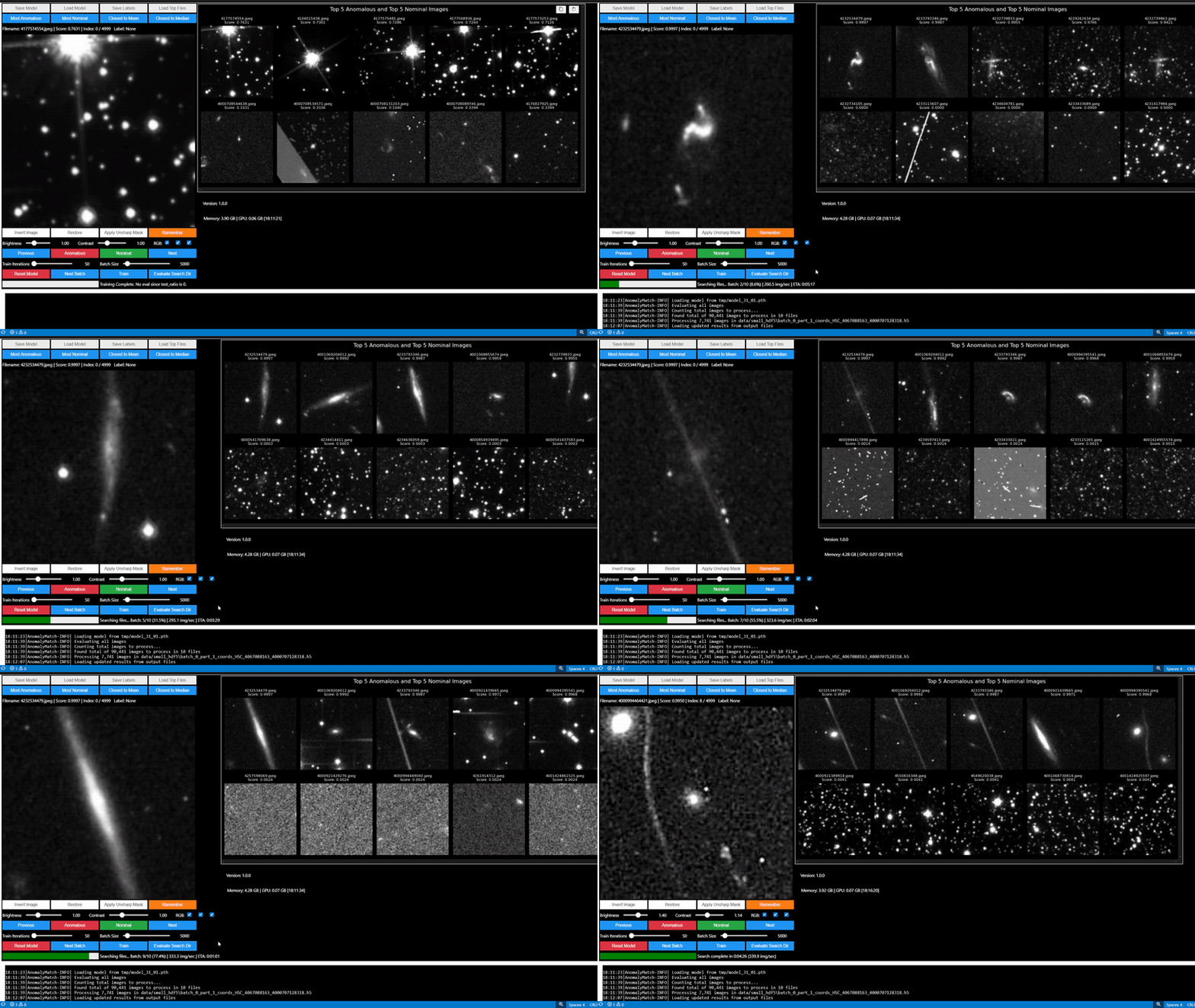
AnomalyMatch uses the FixMatch algorithm with active learning to detect anomalies in astronomical image datasets. Starting from as few as 5-10 labeled examples, it achieves AUROC of 0.96 on miniImageNet and 0.89 on GalaxyMNIST. It provides a Jupyter notebook interface with ipywidgets for interactive labeling and model training.
Key Features
- Semi-supervised learning with the FixMatch algorithm
- Active learning loop: predict, label, retrain
- Multi-format support: JPEG, PNG, FITS, Zarr with normalisation via fitsbolt
- Multispectral support: N-channel astronomical images
- Streaming prediction via Cutana for large-scale cutout extraction from FITS tiles
- Interactive UI for Jupyter notebooks with ipywidgets
Available on ESA Datalabs
AnomalyMatch is available plug-and-play on GPUs in ESA Datalabs, providing seamless access to high-performance computing resources for large-scale anomaly detection tasks.
Quick Links
- Getting Started - Installation, folder structure, sessions
- Method - How AnomalyMatch works
- Architecture - System design overview
- User Guide - Training and prediction workflows
- Headless Mode - Train and score from a script, without the UI
- API Reference - Module documentation
License
AnomalyMatch is distributed under the European Space Agency Public License (ESA-PL) Permissive – v2.4. This is a permissive open-source license that allows use, modification, and redistribution of the software. See the full LICENSE.txt for details.
Citing AnomalyMatch
If AnomalyMatch proves useful in your research, please cite our paper:
Gomez, P., Ruhberg, L. E., Nardone, M. T., & O'Ryan, D. (2025). AnomalyMatch: Discovering Rare Objects of Interest with Semi-supervised and Active Learning. arXiv:2505.03509
See also the CITATION.cff file for machine-readable citation metadata.